



 65 / 92

spring provides the flexibility needed to adjust the
log
’
s angle and prevent slipping. With the press
of a switch, the chain whirs to life, slicing through
timber with high-speed precision. Discs of wood
drop effortlessly into a waiting wheelbarrow, and the
power instantly throttles down. It is a sleek, rhythmic
operation
—
a feat of innovation that makes me want
to applaud every time I see it.
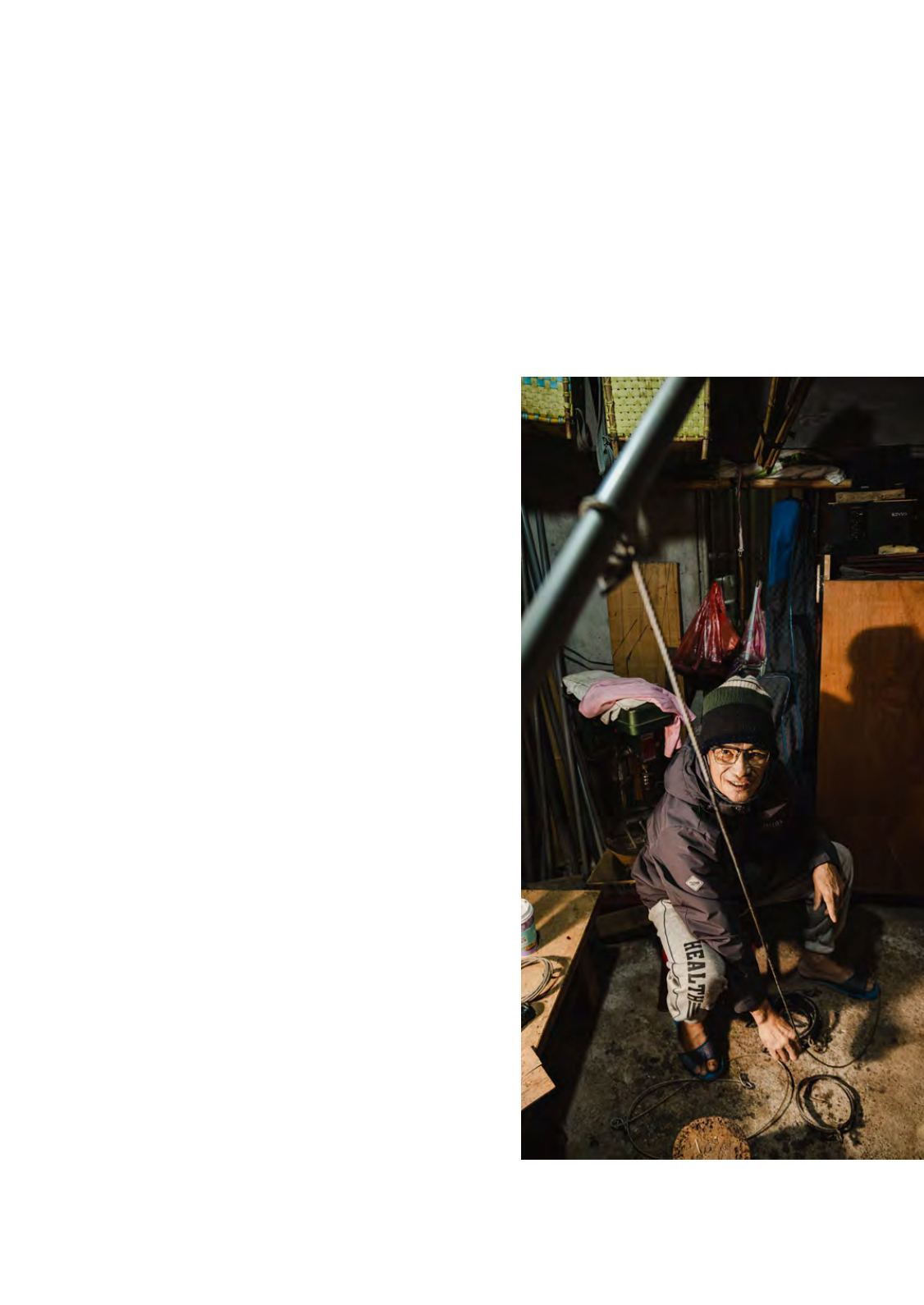
Chih-Ming describes himself as an old soldier. As a
former crewman, he spent twenty years solving crises
on the battlefield with whatever materials were at
hand, maintaining tanks and heavy machinery to
keep the army mobile. Those decades forged a
professional expertise that has become pure instinct.
Now back in the village as a farmer, he applies that
knowledge to the earth.
Every time Chih-Ming completes a new invention, he
insists I come and listen to his confident, impassioned
explanation. "We Indigenous people might not have
a lot of cash," he says, "but our minds are sharp. The
solution will always outsize the difficulty." Yet, as soon
as I shower him with praise, he pivots to a humble
shrug. "I
’
m a low-key guy. I
’
m just meeting a need,
that
’
s all."
In the mountain villages of Wanrong, I witness
a profound beauty: the flowers of experience
blooming from heavy labor, and skills honed for
survival nourishing the fruits of the land. Whether it
is Lung
’
s traditional snares or Chih-Ming
’
s wood-
cutting machine, they are simply "meeting a need"
—
an explanation so blunt, yet so staggering in its
brilliance.
部 落 裡 的 生 活 美 學
Survival Aesthetics in the Village
63