


 49 / 92

remained rooted in the earth. It is proof that as the
world shifts, traditional knowledge continues to
adapt.
An Extended Journey Home
Bo t h Laung and At u l have pa r t i c i pat ed i n
expeditions back to their ancestral lands in
Takivatan. Standing before the stone houses of their
forefathers was a profound shock, fueling their drive
to map the migration paths of their clans. In 2023,
they published Iliudun tu tanqaiv sia lumap: Bahu'an
Bunun siduq takiVatan tu tunlusqu, a book revealing
that even after forced relocation, the Bunun
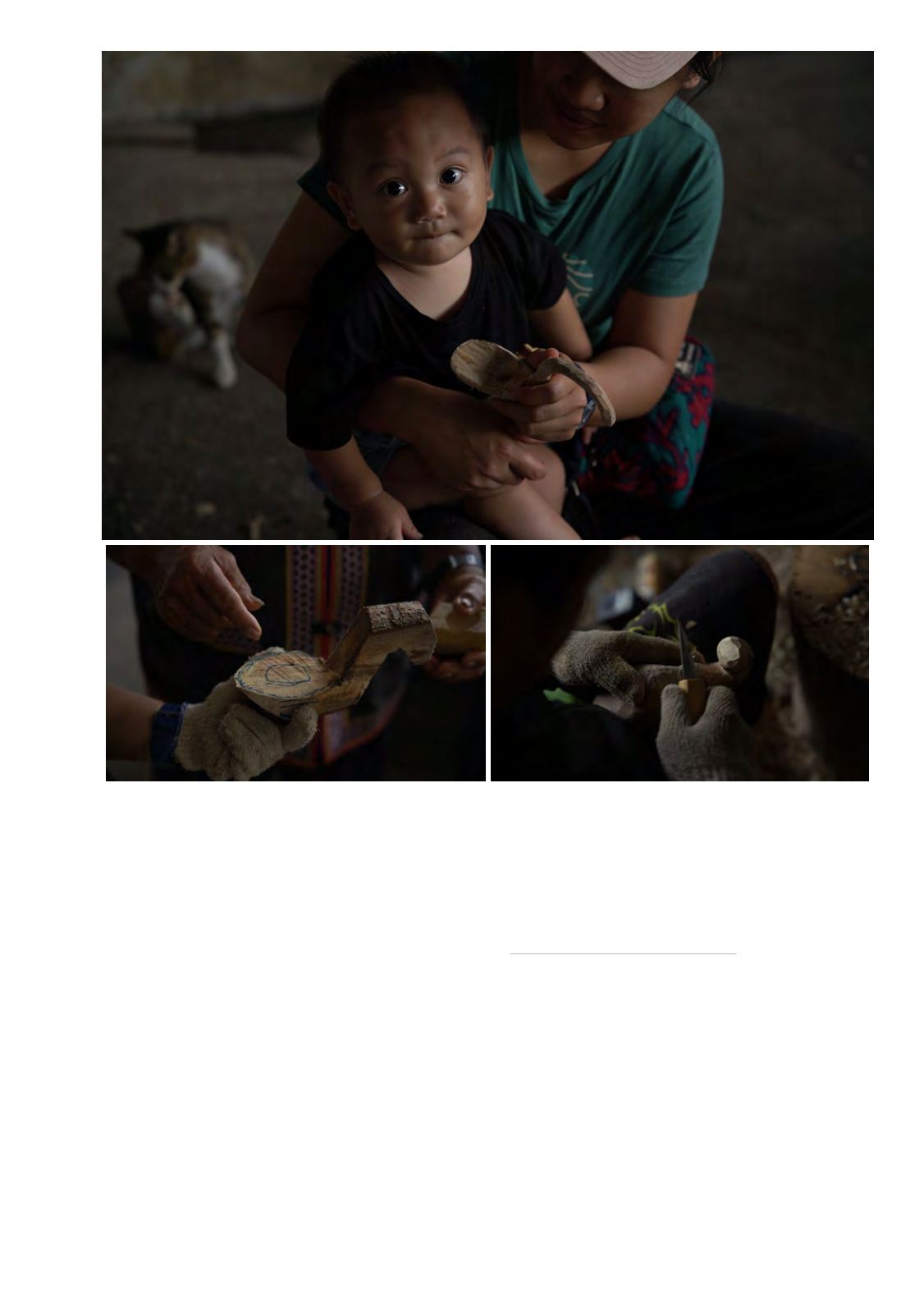
Phoebe tree with a trunk sturdy enough for carving.
Aki Buaq himself was named after this water-loving
tree. Once dried, its wood becomes incredibly
hard
—
perfect for wooden spoons designed to
scrape up the most fragrant, stubborn bits of
scorched millet from the bottom of a pot. These
spoons preserve the memory of families huddled
together, sharing a meal from a single hearth.
Born in 1945, Aki Buaq
’
s family was forcibly
relocated by the Japanese colonial government to
the lower hills of Hualien. Though the environment
changed
—
the altitude and vegetation differing
from their ancestral lands in Nantou
—
their tools
以 器 物 為 路
The Path of the Craft
47